Tuesday, January 30, 2018

Watchingwell   


             Curated classic films


Guilty Pleasures
Movies that are so bad, they’re good

     A few days ago, I was intrigued by a cheesy film title that was appearing on TV that night.  I watched and laughed, imagining what they would be saying on Mystery Science Theater 3000, the cult program where the characters hilariously commented on really bad movies, at the various points of a sad script and careless inconsistencies. This led me to think about other films that I have never before admitted to watching that perhaps other people have viewed in secret. Maybe you’ve never watched them because they sound terrible. Don’t be ashamed!  Nothing makes you aware of the components of professional filmmaking like watching one that seems to lack them.  And sometimes watching a laughably bad film is a fun social activity.  In this season of nominations, these are my selections for the non-excellence awards, but  good for a  laugh and a sense of wonder about how they got produced and released in the first place.  But, hey, the fifties were kind of nutty.


Attack of the 50 Foot Woman (1958)  Directed by Nathan Juran

We don't know exactly what, but something happens to the unhappy woman when she encounters an alien in the desert and is carried away by same, that made her grow and grow and take revenge on her cheat of a husband.


Attack of the Crab Monsters (1957)
Directed by Roger Corman.

You guessed it – radiation is to blame for creating gigantic, murderous crabs who want to eat the scientists on the island for their knowledge.


Attack of the Giant Leeches (1959) Directed by Bernard L. Kowalski

Another “Attack of…”  Well, they don’t attack unless you are foolish enough to go down to the swamp after several people have disappeared when they went down there.  Not the worst of the bunch, actually, or have I had my standards lowered?


Amazing Colossal Man (1957) Directed by Bert I. Gordon


 This is the man-exposed–to-plutonium-bomb-blast plot, where he grows too fast for his blood supply to his brain and becomes insane and attacks Las Vegas. Is there a message here?


The Wasp Woman (1959) Directed by Roger Corman


Where a cosmetics executive experiments with herself with wasp juice to remain eternally youthful. I know, foolish, right?  Hmm, I wonder if anything came of that. 


Bride of the Monster (1955) Directed by Edward D. Wood, Jr.


If you don’t know Ed Wood, this is his best.  A mad scientist attempts to create a super being with atomic radiation.  The best thing about this is Bela Lugosi, who, while old, is still able to infuse some authenticity to the dialogue.


Plan 9 From Outer Space (1959) Directed by Edward D. Wood, Jr.
Ed Wood’s second best/worst.  Aliens try to stop humans from developing a ‘sun bomb’ by turning dead people into zombies and vampires. Some would argue that it’s not the worst film ever made because although inept on every level, it is strangely entertaining.


Robot Monster (1953) Directed by Phil Tucker.

Picture that's worth a thousand words. Not really my idea of what a robot monster would look like, unless it was all I could find for my backyard production -- when I was seven. Title monster wipes out all but eight of the Earth’s population in a cheapie production that makes Ed Wood look like a genius. That alone makes it worth viewing.


King Dinosaur (1955) Directed by Bert I. Gordon.
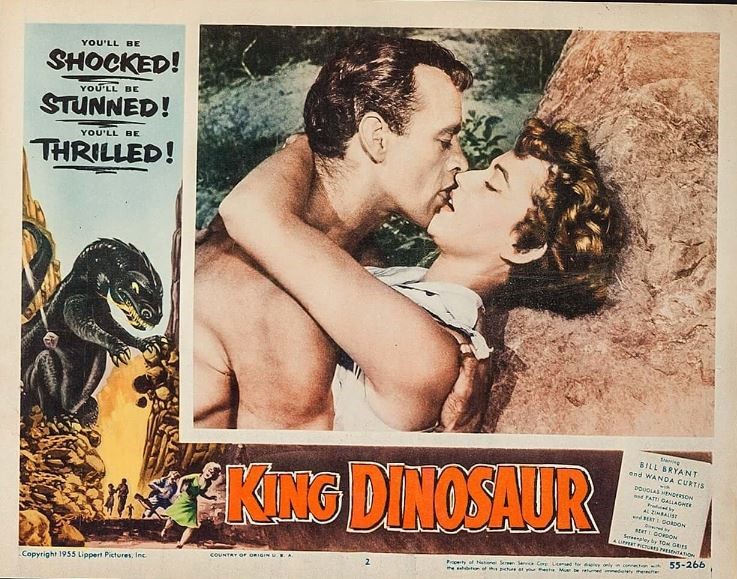
Two astronaut couples (cute concept!) are sent to a newly discovered planet that looks a lot like Earth with the same animals and a low budget dinosaur (lizard). When the mean dinosaur threatens them, they obliterate the planet with an atomic bomb. We don’t come in peace.


The Giant Claw (1957) Directed by Fred F. Sears


     Astonishingly ridiculous-looking, alien, big bird attacks Earth while trying to lay eggs.  A script this bad doesn't get created without determined concentration. B-picture actor Jeff Morrow actually worked again after this embarrassment.

Have I missed anyone's best/worst favorite?


I love this still photo from It Conquered the World (1956)  another great one directed by Roger Corman. Yes, and Beverly Garland also worked again after this.


Monday, December 18, 2017

Watchingwell   


             Curated classic films


Dear Readers,

      In the spirit of the season, instead of suggestions about classic holiday films, which you can still read if you scroll back in time, I offer presents for your viewing enjoyment.


Happy Holidays!

Thursday, November 30, 2017

Watchingwell   


             Curated classic films


 William Powell

Suave, debonair, funny, elegant, sophisticated, polished, urbane, witty, distinguished...OK, I am a big fan of William Powell.  Many people who know only a few classic films are aware of The Thin Man series (1934-1947) where he played Nick Charles, and the great partnership that he had with Myrna Loy as Nora Charles.  But there are some less well-known films that these two made together that exhibit the same wonderful chemistry.

Libeled Lady (1936) directed by Jack Conway, is a gem of a comedy that also includes Spencer Tracy and Jean Harlow in the cast.  Tracy is an editor who enlists Powell to romance socialite, Loy, so she will drop her suit for libel against the newspaper.  Jean Harlow, in a role that shows her talent for comedy, plays his fiancée who suspects that he has really fallen in love with Loy.

Jack Conway also directed the pair in Love Crazy (1941).  Through an annoyingly-contrived misunderstanding, Loy is divorcing Powell, to which he is desperately opposed.  So desperate is he that he agrees to fake insanity to put the divorce on hold.  He doesn't realize that he will be confined in an asylum so he makes an escape through some nimbly-timed and hilarious scenes.

I Love You Again (1940) directed by W.S. Van Dyke, stars Myrna as the disillusioned wife of a man who is replaced by a con artist who looks just like him, when the husband is actually killed on an ocean liner. Powell as the con artist feels that he has landed in a cozy spot where he can hide out from his enemies, but doesn't count on falling for Loy for real.

In Double Wedding from 1937, directed by Richard Thorpe, Myrna Loy is a controlling, career woman who plans her sister's life and that of her fiancé to such an extent that her sister pretends to fall in love with an artist to rebel against the life Loy has mapped out for her.  The artist, William Powell, finds that he has a better idea: that he and Loy should marry. (A similar dynamic is the plot in The Bachelor and the Bobby-Soxer (1947) where Loy plays against Cary Grant.)  

Powell and Loy made fourteen films together and they always seemed to enjoy each other's company.  But, perhaps, this is the mark of the professional, because both actors have great screen rapport with other stars.

A particular favorite is My Man Godfrey (1936) directed by Gregory La Cava, with Powell opposite Carole Lombard.  Powell plays the 'forgotten man' Lombard brings home and turns into the family butler.  Of course, he is really well-to-do and of course, she falls in love with him, and of course, it all ends happily.

A more obscure classic is The Ex-Mrs. Bradford (1936) directed by Stephen Roberts, where Powell's character is drawn into a murder mystery by his ex-wife, played by Jean Arthur, who is a successful mystery novelist. The sets and costumes are glamorous and the mystery is unremarkable, but enough of an excuse for Arthur and Powell to interact.  Naturally, romance is inevitable.


Powell is an astronomer married to Hedy Lamarr in The Heavenly Body (1944) directed by Alexander Hall.  He is so absorbed in his work that Hedy is excited about meeting a 'dream man', an event predicted by her astrologer, played by Spring Byington. Silly plot (what man would be that absorbed in his work with Hedy Lamarr at home?) but an enjoyable comedy, even so, with the two stars being so easy to watch.


In Star of Midnight (1935) directed by Stephen Roberts, we get luscious art deco sets (take a look at Powell's bathroom ) and costumes surrounding a stylish, but hard-to-follow, murder mystery. An actress has disappeared, the star of a play called, "Midnight".  Powell is a rich lawyer and Ginger Rogers tags along, all the while setting her sights on Powell with a view to marriage. Not Myrna Loy level, but, definitely good chemistry.


If you're curious, the fourteen films Powell made with Myrna Loy are the four mentioned above, the six Thin Man films, Manhattan Melodrama, The Great Ziegfeld, Evelyn Prentice, and The Senator Was Indiscreet, in which Loy appeared in a cameo.


Monday, October 30, 2017

Watchingwell   


             Curated classic films


SCARY MOVIES
      
      Why do we (I mean you) like to scare ourselves at the movies? Is it the ability to trap our fears and anxieties in the rectangle of the screen?  Is it our insatiable appetite for cheap thrills? Whatever.  I have never had the problem. Never voluntarily watched horror or slasher films unless out of boredom when they appeared on TV, and then, I thought them predictable and not scary. I think most would agree that an essential element of scary is surprise, so it can only happen, if it happens at all, in the first viewing.  For example, a rather successful use of surprise to send hearts into arrhythmia, Halloween (1978), a film I saw when it was
old enough to be shown on TV, and I still can’t imagine what kind of suspension of my identity made me watch it, was the first and the best of the deranged-killer-stalking-teenyboppers- slasher genre.  Director, John Carpenter, was astute in his understanding that the anticipation of something terrible holds more terror than the actual event.  With admirable restraint, he shows the killer, Michael Myers, in shadow or in grainy glimpses, but more in the eyes of his victims.  No streams of gore or digitalized special effects, just an ordinary neighborhood, which makes the deranged killer lurking around even more terrifying, juxtaposed against this most normal of settings. For most of the film, I halfway looked away at times, so as not to be jolted when the music tipped me off, but I will admit there was one scene, -- I won’t give it away for those who have yet to see it, but I will say only that I have never again looked at knitting needles without thinking of it.  

    George Romero’s Night of the Living Dead (1968)
was a genuinely creepy film that was ultra-economical in every way, including its actual mayhem, concentrating on the terror of the characters trying to stay alive. What was going to happen inside the house, among the humans added as much to the tension as the zombies outside. For me, it was a film so unlike any horror formula that I didn’t really know what was coming next, or how it would end, and that made it genuinely suspenseful.  It was a groundbreaking film that spawned a whole genre of low-budget, documentary-style horror films.  But there is no suspense in the second viewing, once you know how it ends.

     For similar reasons, Kubrick’s film, The Shining (1980) was so unlike any other that it got pretty scary as it went along, without a clue to the audience as to whether the protagonists would survive.  The location in the snowbound hotel in the Rockies, the interior sets, the score, and the photography conspired brilliantly to create an atmosphere of menace.  As I have written here before (1/4/16 post), the camera leading us down deserted hotel corridors, not knowing what was around each corner, made me afraid. Loosely based
(according to King) on a Steven King story, this Kubrick masterpiece is a beautiful film that challenges our sensibilities to attach beauty to evil. This, you could watch more than once and still be mesmerized.

     The first time I saw the 1931 Dracula with Bela Lugosi, I think I was afraid.  I was a child and director, Tod Browning created an atmosphere of  creepiness with Dwight Frye doing that weird laugh and the ever-elegant Lugosi leaving us with no doubt that he had powers stronger than his adversaries.  But, I’ll share with you the only time I ever really felt uneasy watching a film was when I first saw the German silent vampire classic of F.W. Murnau, Nosferatu (1922). The first screen contains a warning that even to utter the name, N o s f e r a t u, is to be doomed.  I am not susceptible to suggestions of the supernatural, but this gave me a shiver.


     Although this blog is devoted to American classic cinema, a discussion of scary movies for me has to mention German Expressionist Films and the early work of Fritz Lang. His science fiction classic, Metropolis (1927), gave us many ominous special effects, and the original mad scientist.  Lang’s first talking picture, M (1931), is a chilling picture of the worst criminal, a child killer, but we see no violence – only the absence of a child that was there a moment ago.  Peter Lorre stars as the hunted killer and Lang presents him
as so desperate that we feel his terror at the same time we wish for his capture.  

     In 1933, he made The Testament of Dr Mabuse, the evil mastermind who is seemingly able to control his empire after death.  It has some rather remarkable special effects, for its day, and is spookier than many of the modern, evil mastermind films. 


      For those of you who would never watch a silent film, I urge you to try to watch The Cabinet of Dr. Caligari (1920), a masterpiece by Robert Wiene.  Its angular, distorted sets reflecting the distorted minds of the characters, the hypnotist and the somnambulist, are disturbing. Murders are committed, but plot twists make us unsure about the ending.  A true work of art.  Also creepy.